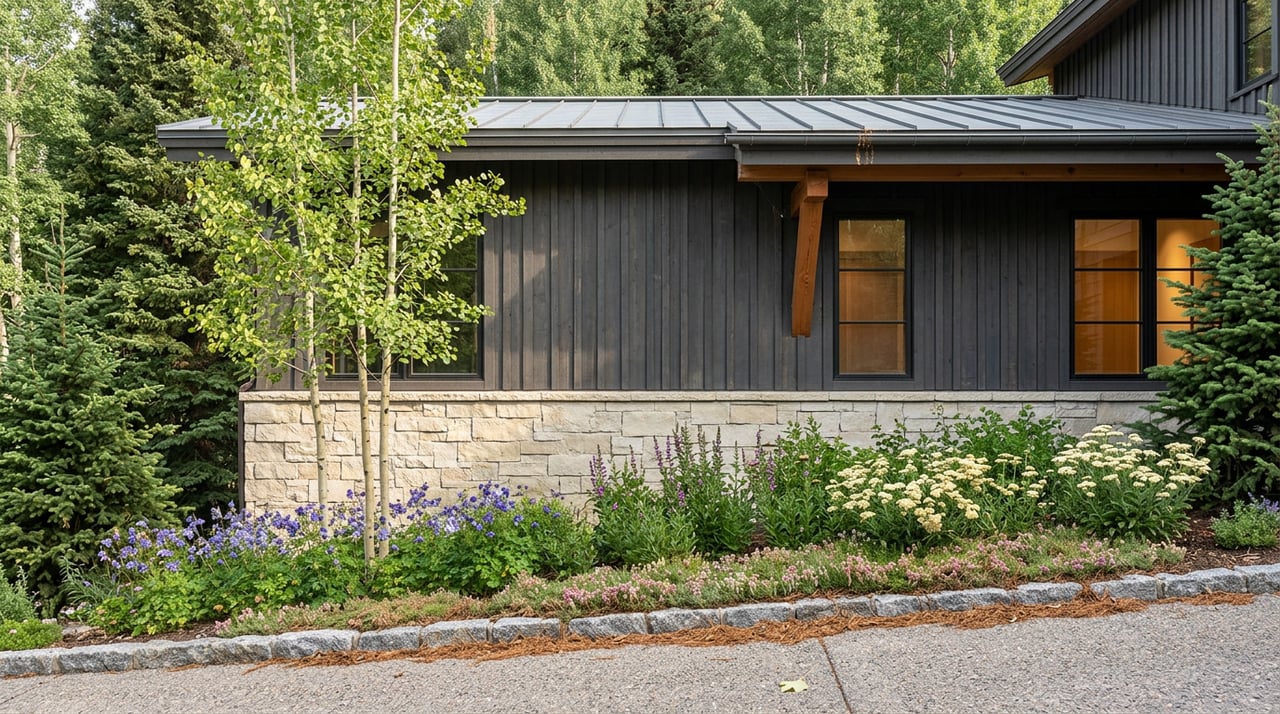
If you own a home off Bighorn Road or Fall Line Drive, you already know East Vail is not a place you visit. You live above the highway, below the Gore Range, at the eastern tail of a valley the Town of Vail has spent the last five summers actively redesigning around you. The neighborhood is loved to a fault. It sits next door to some of the most photographed hikes in Colorado, and every June it inherits a fresh wave of visitors who did not read the signage.
The story of summer 2026 in East Vail is not really about events. It is about a set of quiet engineering choices that add up to something residents can feel on a Saturday morning: fewer illegal parkers on Columbine Drive, thinner smoke on the horizon, and a slightly different set of tradeoffs on the trails you already know by heart.
The fire calculus is different this year
Two June headlines set the tone for the entire season. On June 23, crews began the Booth Creek Fuels Reduction Project, and Town of Vail communications described the work as focused on dead and dying trees to substantially reduce wildfire risk. That is happening on the slope directly above the Booth Creek and Bald Mountain Road neighborhoods, and the tree work is the visible half of a longer conversation about defensible space in the Gore Valley.
The other half arrived the next day. Vail moved to Stage 2 fire restrictions on June 24, and the town canceled its Fourth of July fireworks based on moisture measurements in vegetation and other risk factors. A neighborhood ringed by lodgepole and standing beetle kill does not get fireworks in a dry year, and that is a policy shift worth internalizing if you plan to entertain guests. Vail America Days still ran on the Fourth, but the sky went dark at nightfall for the first time in recent memory.
If you are new to East Vail, the practical takeaway is simple: no open flame, no charcoal, no sky lanterns, and no exceptions until the town rescinds the order. Check the Town of Vail news feed at vail.gov before any gathering.
The Booth Creek work will continue into the shoulder season. Expect chainsaws, chippers, and occasional trailhead-adjacent closures on weekdays. It is not glamorous, but it is the reason your homeowner's policy renewal conversation may feel less anxious this fall than it did last one.
The trailhead system, translated for people who already live here
Most residents I work with have made peace with the fact that Booth Lake is no longer a "drive up and go" hike. What is worth knowing is how the whole East Vail trailhead system now fits together, because the rules are not uniform across the four canyons.
| Trailhead | Access from I-70 Exit 180 | 2026 parking rule | Bus stop |
|---|---|---|---|
| Booth Falls / Booth Lake | Booth Falls Road | No parking at trailhead, neighborhood, or Vail Mountain School lot since May 31; violators towed | Booth Falls (East Vail bus + Hiker Express) |
| Pitkin Creek | Bighorn Road to Fall Line Drive | Three-hour limit | Falls at Vail |
| Bighorn Creek | Bighorn Road to Columbine Drive | Three-hour limit, no overnight | Columbine |
| Gore Creek / Deluge Lake | End of Bighorn Road | Designated spaces, first-come, delineated no-parking zones | Main Gore / Bighorn |
The Booth Lake closure is now in its fifth season, and the Hiker Express shuttle runs daily 7:45 a.m. to 4:45 p.m. from May 31 through September 2, then Fridays through Sundays from September 6 through October 13; the inaugural summer of the shuttle saw more than 14,000 riders. That ridership number is the whole argument. The lot at the top of Booth Falls Road holds a few dozen cars. The trail sees thousands of hikers on a good July weekend. There was no version of that math that worked without a bus.
For everything else, the Town's own transit is the tool. The East Vail and East Vail Express buses begin at 6 a.m. and offer 15-minute service throughout most of the day to four trailhead bus stops in East Vail: Booth Falls, Falls at Vail, Columbine, and Main Gore/Bighorn, as well as other stops along the way. If you have overnight guests and only one car, the practical move is to send hikers down to the nearest East Vail stop rather than shuttle them yourself. The buses are free.
The three-hour limits at Pitkin and Bighorn are the piece that catches homeowners off guard. Those are day-use trails with objectives that take most people six to eight hours round trip, and the parking limit is not aligned with the hike. Backpackers can park for free at the Gore Creek or Red Sandstone parking garage and take the bus to the Pitkin trailhead; the alternative is to pay $35 to park overnight in the Vail parking structure and use the free bus to reach the trailhead. That is the answer to give the friends who want to bag Pitkin Lake in a day.
The wildflower window closes faster than people think
Pitkin Creek is the trail I recommend to summer guests who want one big memory. It is not a secret, but it is not Booth Lake either, and the payoff scales with the effort. From the trailhead at 8,500 feet, the trail climbs to Pitkin Lake at 11,400 feet across roughly 4.5 miles one way, with the first mile doing most of the work out of the valley.
The reason to go in the next six weeks specifically: the Pitkin Falls come into view about 2.5 miles in, with another cascade a mile later, and the meadows below the lake teem with wildflowers in July and August before you reach aquamarine waters surrounded by dramatic granite walls. That July-to-August window is real, and it closes fast at 11,000 feet. By mid-September the color is gone and the aspen shift begins.
Two things residents forget about this trail. First, it starts steep, and the altitude at the trailhead is already higher than most first-time guests have slept at. Second, fallen trees along the trail are evidence of past avalanches, which is a useful thing to know when you are walking through a chute in July and wondering why the forest suddenly opens up. It is the same reason your ski patrol friends stare at that drainage every March.
If Pitkin sounds like too much, the shorter answer in the same neighborhood is the East Vail Falls trail. At I-70 Exit 180, take Bighorn Road into East Vail and turn right on Bridge Road to Lupine Drive; the trail begins nearby and climbs steeply to the falls. It is a short, punchy walk, and it is the one to send a guest on if they want to be back for lunch on the deck.
The case for Bighorn Creek
If you want the local move, it is Bighorn. The valley is the least crowded of the four East Vail drainages, and the roughly 7-mile round trip passes beaver ponds, crosses Bighorn Creek, and can view the seasonal Bighorn Falls in the distance, and affords the best view of the iconic Grand Traverse, a continuous ridge connecting a stretch of 12,000- and 13,000-foot peaks. That Grand Traverse view is the postcard you already have hanging in your entryway, seen from the ground rather than through your living room window.
Bighorn is also where the trail system genuinely thins out. It does not have a marquee alpine lake, which is precisely why the crowds go elsewhere. On a Tuesday morning in August, you can walk two miles up Bighorn and see three people. That is not an experience Booth Lake offers anymore.
The larger point for people who live here
Every one of these changes is the town treating East Vail as infrastructure rather than scenery. The shuttle, the fuels work, the parking limits, the fire order: none of them are marketing decisions. They are the operating cost of owning a home at the edge of a wilderness area that draws two million visitors a year to the valley beneath it.
The homeowners who see the pattern are the ones who bought here for the long view. The trailhead you walk to from your driveway is not the same trailhead your neighbor drove to five years ago, and that is mostly a good thing. Quieter mornings. Cleaner air. A forest that has a fighting chance in the next dry August.
If you are thinking about how any of this changes the picture for your East Vail property, whether that means listing next spring, refreshing a rental for the shoulder seasons, or finally taking the plunge on the mountain retreat you have been circling for years, Tricia Gould would be glad to walk the block with you. Let's Connect.