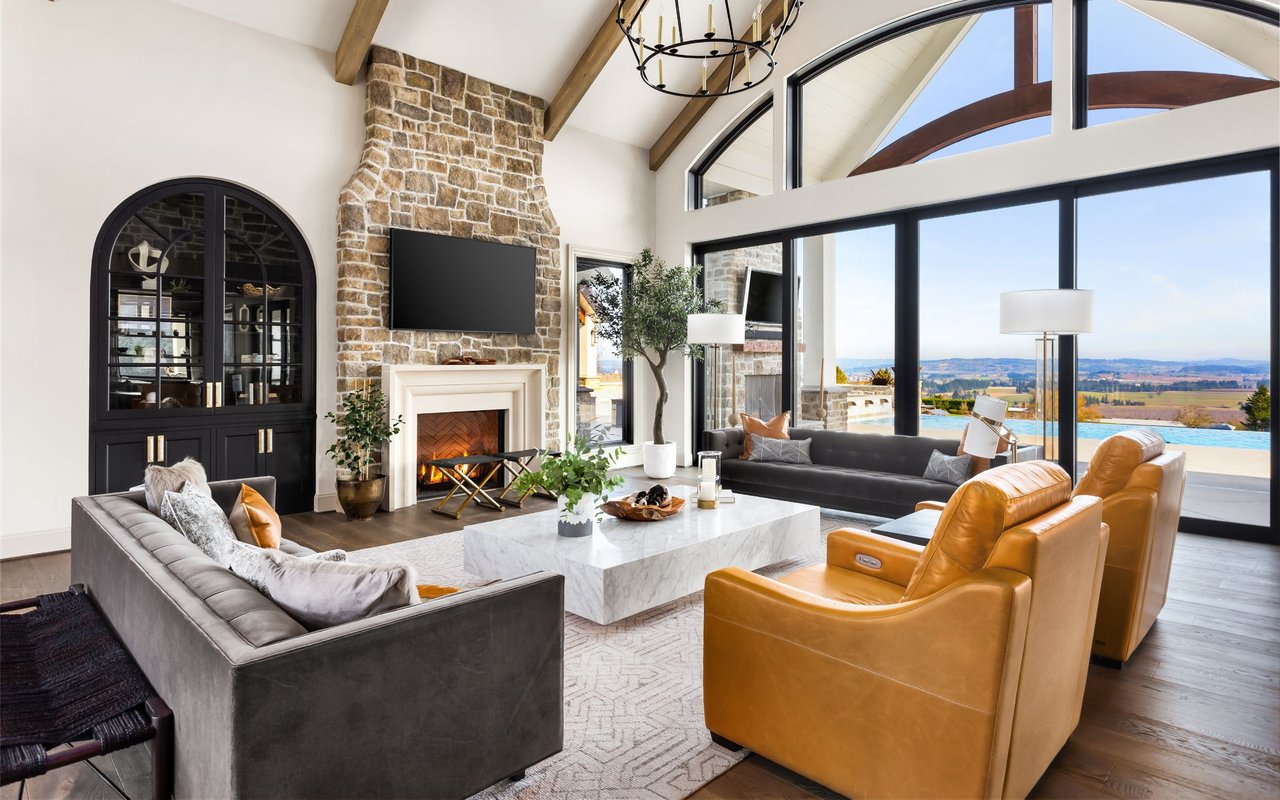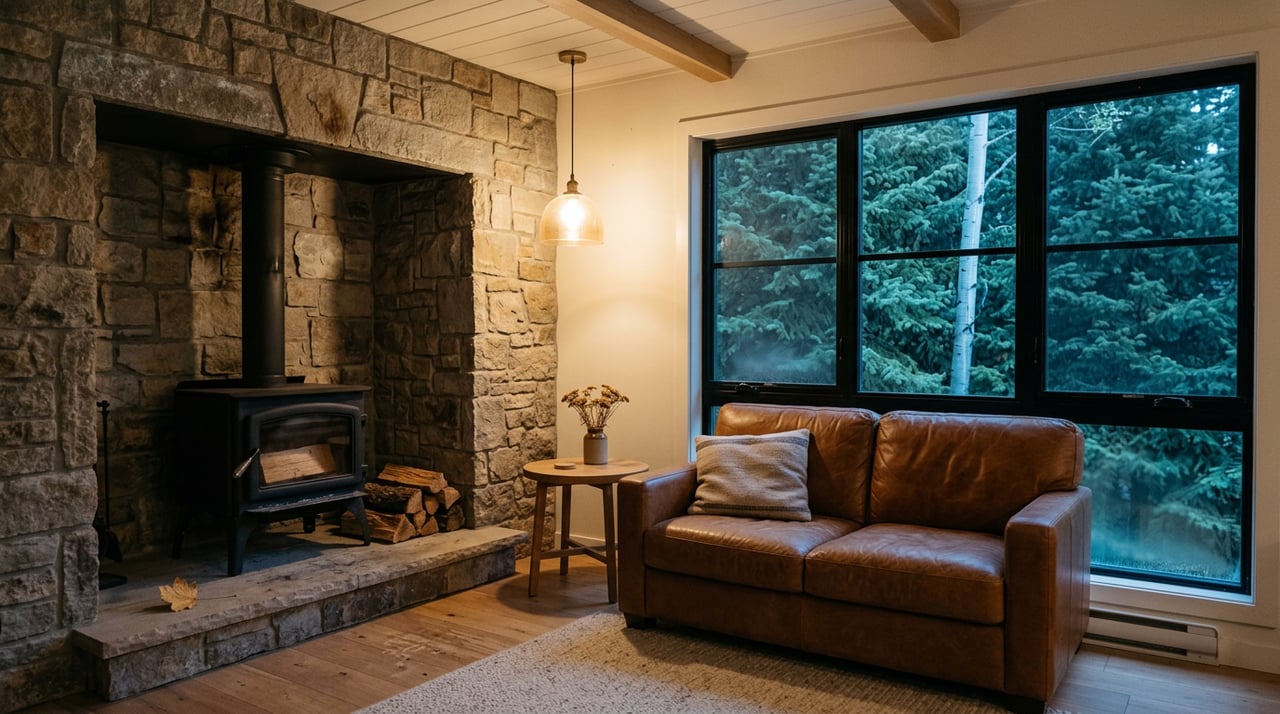
Two two-bedroom, two-bath condos, same complex, same address on Bighorn Road. One sold on the open market for $1.1 million, according to the town's own staff memo. Around the same time, the town negotiated to buy a comparable unit in that complex for $975,000, a property that had been listed at $1.2 million, specifically so it could resell it at a fixed price of $625,000 to a buyer who works at least 30 hours a week for an Eagle County business.
That is not a fluke of timing or condition. It is Pitkin Creek Park, one of East Vail's most popular condo communities, and it is quietly running two separate real estate markets inside one homeowners association.
The Complex Everyone Recognizes, But Not Fully
Pitkin Creek Park sits on Bighorn Road, right on the free Town of Vail bus route, next to the Sims Market and Liquor Store. It shows up constantly in buyer searches because it checks the boxes that matter to second-home and investment-minded shoppers: a pool, a hot tub, a volleyball court, walkable creekside setting, and a well-established history of allowing short-term rentals. Owners who want a lock-and-leave mountain property with real income potential gravitate here for good reason.
What most buyers do not realize until they are deep into a search is that the same complex has, for decades, also served as a supply source for the Town of Vail's employee housing program. Pitkin Creek was developed in the early 1980s with its original units deed-restricted, and that history did not stop when those first restrictions expired. It picked back up, unit by unit, and it is still adding restricted units today.
How A Market-Rate Condo Becomes Something Else Entirely
The mechanism is the Town of Vail's buy-down program, established in 1999, along with the newer Vail InDEED initiative launched to accelerate it. The process is straightforward on the town's side: when a Pitkin Creek unit comes up for sale, the town can purchase it at or near market price, attach a permanent deed restriction, and resell it at a fraction of that price to a qualified local worker.
The numbers show how large that gap gets. In 2022, the town paid $975,000 for that two-bedroom, two-bath Pitkin Creek unit, listed at $1.2 million, then set its resale price at $625,000 for a qualified local buyer, with at least 75 percent of that buyer's income required to come from an Eagle County employer. That same year, the town bought a separate one-bedroom Pitkin Creek unit for $610,000 to add to the same program. Pitkin Creek's original 1980s units sold for as little as $82,000 under their first-generation deed restrictions, before those restrictions expired after seven years and the units reverted to full market pricing. Decades later, the town is back in the same buildings, attaching new restrictions one closing at a time.
Here is the part that matters for anyone comparing listings: the deed restriction does not disappear at resale. It runs with the property. It does not expire on a future sale, transfer through inheritance, or reset through a gift. A unit that gets restricted today stays restricted indefinitely, through every owner who follows.
What You're Actually Buying Changes, Not Just What You Pay
| Free-market Pitkin Creek unit | Deed-restricted Pitkin Creek unit | |
|---|---|---|
| Who can buy it | Any buyer | Must work 30+ hrs/week at an Eagle County business, 75% of income locally earned |
| Short-term rental | Allowed under HOA rules | Not permitted, occupant use only |
| Resale price | Market value | Capped, typically 1.5% to 3% annual appreciation |
| Documented 2022 sale | $1.1 million (2-bed, 2-bath, open market) | $625,000 to $635,000 range for restricted units of similar size |
| How it's sold | Standard MLS listing | Often through a town-run lottery |
A Vail town council member summed up the mechanism plainly when the town approved one of these purchases: "We're the proud owners and we're going to hopefully sell it to someone else that will be the proud owner and it will be deed-restricted." The town is not hiding what it is doing. It is buying market-rate inventory and converting it, on purpose, unit by unit.
Why This Breaks A Simple Comp Pull
If you or your agent pull recent sales at Pitkin Creek Park to estimate what a unit is worth, and the pull is not filtered for deed restrictions, you get a distorted picture in both directions. A $625,000 restricted resale sitting next to a $1.1 million market sale is not evidence of a wide price range within the same product. It is two different products that happen to share a mailing address.
The demand data backs this up. In a 2022 lottery round, a Pitkin Creek Park deed-restricted condo drew 8 qualified applicants, while a Chamonix Vail townhome offered in the same cycle drew 48. Restricted units serve a smaller, specific buyer pool by design, and that pool behaves nothing like the open market.
Meanwhile, a current free-market Pitkin Creek listing shows what the unrestricted side of the complex can actually earn: one two-bedroom unit's short-term rental history runs $5,300 in 2023, $28,000 in 2024, $26,500 in 2025, and $18,200 so far in 2026, for roughly $79,000 total across 254 rented nights over four years. That income stream simply does not exist as an option for the unit next door if it carries a deed restriction.
This is not a rare technicality that only shows up once in a while, either. As of 2023, the town had 1,033 deed-restricted properties across Vail, and 47 of them, about 4.5 percent, were flagged as non-compliant with the terms of their restriction. The town takes enforcement seriously enough that it reached a $1 million settlement with the owners of Altus Vail over deed-restriction violations in November 2023. If you buy a restricted unit and rent it short-term anyway, or let a non-qualifying tenant move in, you are not looking at a paperwork slap on the wrist.
What To Actually Do Before You Write An Offer
If a Pitkin Creek Park listing catches your eye, or you are looking at any East Vail complex with a mixed ownership history, ask one question before anything else: does this specific unit carry a deed restriction? The listing sheet will not always spell it out clearly, and a fast-moving showing schedule can bury the detail.
A title search will show a recorded deed restriction if one exists. Your agent can also check the county's public records directly. If you are counting on short-term rental income as part of your purchase decision, this single check determines whether that income is even legal to earn, not just how large it might be.
If the unit is restricted, understand what you are actually buying: a home you can occupy if you qualify, at a price capped well below the units next door, with resale governed by the town's guidelines rather than the open market. That can be a genuinely good option for someone who works locally and wants to own in East Vail at a fraction of market price. It is a poor fit for anyone expecting rental income or planning to sell at open-market appreciation.
A Few Questions Worth Asking Directly
Does this only happen at Pitkin Creek Park? No. The same mechanism has restricted units at Chamonix Vail in West Vail, Vail Commons, and other complexes across town. Pitkin Creek is simply one of the more active and visible examples in East Vail because the town has purchased multiple units there in recent years.
Can a deed restriction ever be removed? The town's InDEED-purchased restrictions are structured to run in perpetuity and are not designed to expire the way the original 1980s Pitkin Creek restrictions did. Removal is not something a buyer should plan around.
If I already own a free-market unit at Pitkin Creek, does any of this affect me? Not directly, since your unit's rights stay as they are unless you voluntarily deed-restrict it in exchange for InDEED funding. It is still worth knowing which of your neighbors' units carry restrictions, since it affects how appraisers and buyers should read comps for the building going forward.
Buying in a complex with mixed inventory is not a reason to walk away. It is a reason to ask the right question at the right moment, before you are three weeks into a contract and discovering the answer the hard way.
If you are weighing a purchase in East Vail, or you want a second set of eyes on a listing before you write an offer, Tricia Gould can help you sort out exactly what you are buying and what it is actually worth. Let's Connect.